PETMAKER Artificial Grass Puppy Pee Pad Review - Budget Grass Option
Full review of PETMAKER Artificial Grass Puppy Pee Pad. Affordable artificial grass system for indoor potty training.
Affiliate Disclosure: This post contains affiliate links. If you make a purchase through these links, we may earn a commission at no extra cost to you.
When friends asked us how to determine if their newly adopted rescue would use an artificial grass potty system, we didn't recommend the $50 LOOBANI or $35 Fresh Patch systems that we typically review. Instead, we pointed them to PETMAKER, the budget option at under $20 that serves as a perfect low-risk trial. If the dog hates artificial grass, you're out less than the cost of a pizza. If the dog loves it, you can upgrade to a premium system with confidence. After using PETMAKER as our standard recommendation for trial purposes, we decided to conduct a thorough review to understand exactly what budget buyers can expect from this entry-level grass pad.
PETMAKER Artificial Grass Puppy Pee Pad
Key Features
- ✓3-layer system with collection tray
- ✓Realistic grass texture
- ✓Removable grass for easy cleaning
- ✓Lightweight and portable
Pros
- +Most affordable grass pad system
- +Good for testing if dog likes grass
- +Lightweight for travel
Cons
- −Smaller than premium options
- −Plastic tray feels flimsy
The Value of Low-Risk Testing
Before discussing the product itself, let's address why affordable trial options matter in this product category. Dog bathroom preferences are surprisingly individual. Some dogs immediately take to artificial grass, their instincts recognizing it as an appropriate elimination surface. Others sniff it once and walk away, never to use it regardless of training efforts. Premium grass systems like LOOBANI ($45.99) or Fresh Patch subscriptions ($30+/month) represent meaningful investments. If your dog falls into the 'grass refuser' category, that money is wasted. PETMAKER at $19.99 provides the same fundamental experience (artificial grass surface with drainage system) at a fraction of the cost. Think of it as a paid trial: if successful, you've identified a solution your dog accepts and can confidently invest in a better system. If unsuccessful, you've saved $25-30 compared to trying a premium product first. This trial mindset is exactly how we recommend using PETMAKER.
Understanding the 3-Layer System
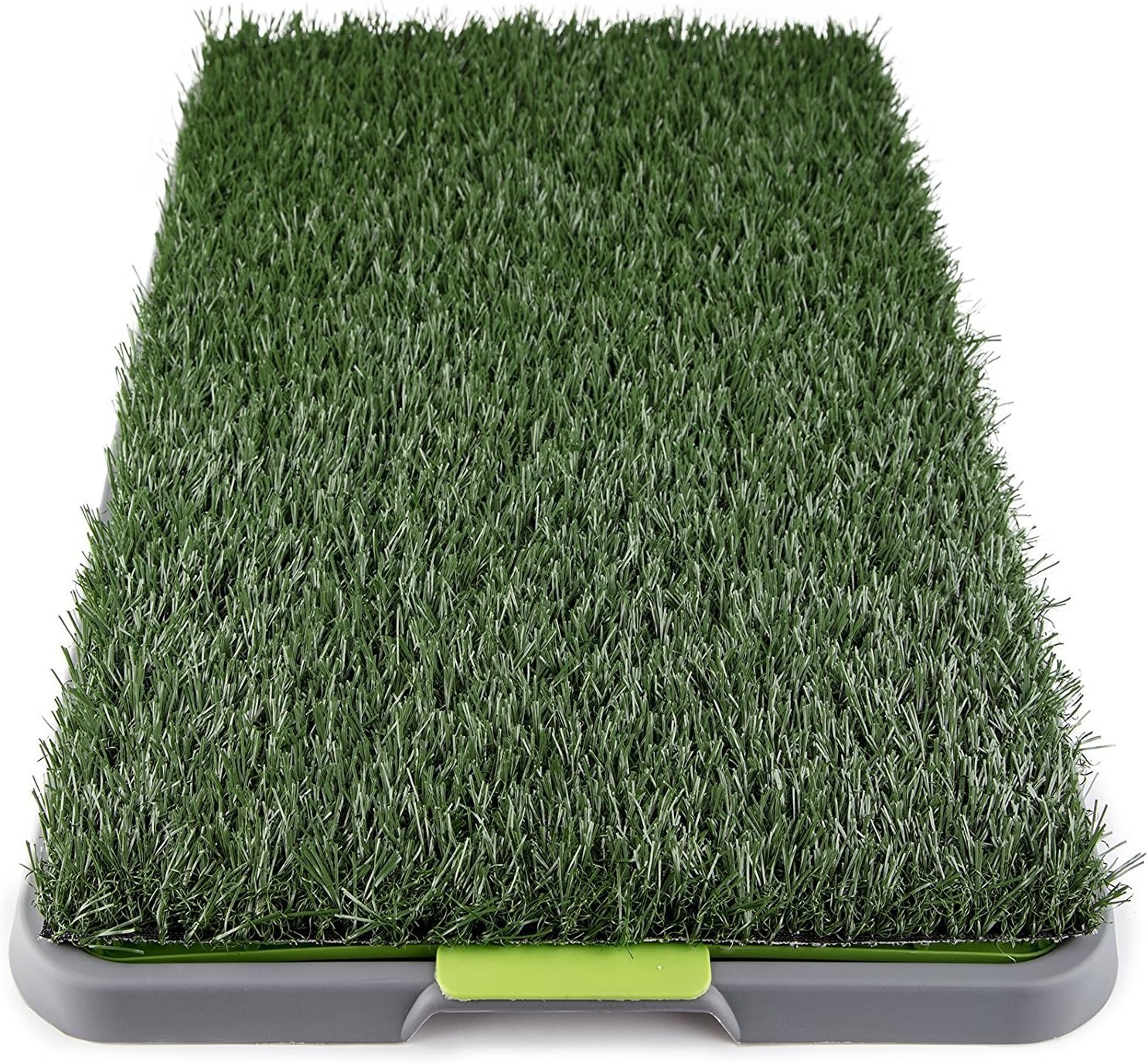
PETMAKER follows the standard grass pad design with three functional layers. The top layer is artificial grass made from polyethylene plastic blades approximately 1 inch tall. The grass density is lower than premium options, meaning you can see the backing more easily between blades. However, the texture is similar enough to trigger bathroom instincts in most dogs. The middle layer is a grated plastic platform with drainage holes spaced approximately 1 inch apart. Liquids pass through the holes to the collection tray below. The grate also keeps the grass elevated, allowing airflow that helps prevent odor buildup. The bottom layer is a plastic collection tray that slides out for emptying. Tray capacity is approximately 1 liter, sufficient for multiple small dog uses or a couple of medium dog accidents before requiring emptying. The plastic feels thinner than premium alternatives but held up to our testing without cracking.
Size Limitations: Honestly Assessing the Footprint
PETMAKER's dimensions of approximately 16x20 inches (320 square inches) make it the smallest grass system we've tested. To put this in perspective, LOOBANI measures 25x20 inches (500 square inches), providing 56% more coverage. This size constraint has real implications. For toy breeds under 10 pounds, PETMAKER provides adequate room for comfortable positioning. Our 8-pound Chihuahua mix used it without any issues. For small breeds 10-20 pounds, the size becomes marginal. Dogs can use it but may feel cramped, potentially leading to accidents that miss the edge. Our 15-pound Beagle mix could use it but clearly preferred larger surfaces. For medium breeds 20-40 pounds, PETMAKER is too small for practical use. Dogs this size need 400+ square inches minimum for comfortable positioning. For large breeds over 40 pounds, don't bother, this product isn't designed for you. Our honest recommendation: PETMAKER is suitable only for dogs under 15 pounds, or as a pure behavioral test for larger dogs before investing in an appropriately sized premium system.
Construction Quality: What Budget Gets You
Let's be direct about quality: PETMAKER is not built to the same standards as premium alternatives. The grass layer is thinner, with visible backing between blades. While functional, it doesn't feel as realistic as LOOBANI's denser grass. The grate platform is made from lightweight plastic that flexes noticeably under pressure. It supports small dogs fine but might crack under larger dogs or rough handling. The collection tray uses thin plastic that dented when we accidentally dropped it during cleaning. It still functions, but don't expect durability. Edge finishing is basic, with visible mold seams rather than the clean finishing of premium products. None of these quality issues prevent the product from working. Dogs don't care about mold seams or grass density. But these compromises explain the price difference and set appropriate expectations for longevity. If your trial succeeds and you continue using PETMAKER long-term, expect to replace components or the entire unit within 12-18 months.
Grass Longevity and Replacement Costs
The grass insert is the consumable component that determines ongoing costs. PETMAKER grass quality means shorter lifespan than premium alternatives. Under daily use by a single small dog, expect the grass to show significant wear (flattening, discoloration, odor retention) within 8-12 weeks. Premium grass from LOOBANI lasts 16-24 weeks under similar use. Replacement grass inserts for PETMAKER are available on Amazon for approximately $10. Assuming replacement every 10 weeks, that's roughly $52 per year in grass costs. Compare to LOOBANI replacement grass at $15 every 20 weeks, or $39 per year. The math slightly favors premium products for ongoing costs, but the difference isn't dramatic. For budget-conscious owners who confirmed their dog accepts artificial grass via the PETMAKER trial, continuing with PETMAKER and accepting more frequent grass replacements is a valid strategy.
Maintenance Protocol for Budget Systems
Budget construction actually simplifies maintenance in some ways. Daily care: Empty the collection tray and rinse with water. The smaller tray capacity means more frequent emptying than premium systems. Every 2-3 days: Remove the grass layer and rinse with water, shaking to remove debris. The thinner grass dries faster than premium alternatives, typically within 2-3 hours. Weekly: Deep clean all components with an enzyme-based pet cleaner. The simpler construction means fewer crevices for odor-causing bacteria to hide. Soak the grass in enzyme cleaner for 15 minutes, then rinse thoroughly. Monthly: Inspect components for cracks or damage. The budget plastics are more prone to failure, so catching issues early prevents messes. One maintenance advantage of PETMAKER: the lightweight components are easier to handle than heavy premium systems. We could clean the entire system over our kitchen sink, whereas larger systems require bathtub cleaning.
Real-World Testing: 3 Months with Two Small Dogs
We conducted a 12-week test using PETMAKER with two foster dogs: a 7-pound Chihuahua and a 12-pound terrier mix. Both dogs had never used artificial grass before, making them ideal trial subjects. Week 1: Introduced the system with treats and positive reinforcement. The Chihuahua used it on day 2 without issues. The terrier was skeptical and required placing her on the grass after walks when we knew she needed to go. By day 5, both dogs were using the system voluntarily. Weeks 2-4: Consistent use by both dogs, approximately 3-4 times daily combined. No accidents outside the pad area. Odor was manageable with daily tray emptying. Weeks 5-8: The grass began showing wear, with some blades flattening and slight discoloration in frequently used areas. Function remained acceptable. We noticed the terrier occasionally missing the edge, likely due to the small footprint. Weeks 9-12: Grass clearly needed replacement. Odor retention increased despite cleaning. Replaced the grass insert at week 10, which restored like-new performance. Both dogs continued using the system without hesitation. Total cost for 12 weeks: $19.99 initial + $10 replacement grass = $29.99, or approximately $2.50 per week.
Final Verdict
PETMAKER Artificial Grass Puppy Pee Pad fulfills a specific and valuable role in the indoor potty market: the low-risk trial option. At under $20, it allows dog owners to test whether their pet will accept artificial grass without significant financial commitment. Our 12-week test with two small dogs confirmed that the system works as advertised, with appropriate expectations for budget construction and size limitations. The honest assessment: PETMAKER is suitable for dogs under 15 pounds who may continue using it long-term, or for larger dogs as a pure behavioral test before investing in a properly sized premium system. The lower grass quality means more frequent replacements, but ongoing costs remain reasonable. If you're unsure whether artificial grass is right for your dog, PETMAKER is exactly where to start. If your trial succeeds and you have a dog over 15 pounds, plan to upgrade to a larger system like LOOBANI. The $20 trial investment will have been worth every penny for the confidence it provides.